Knee Therapy for Pain: Simple Guide for Lasting Knee Relief By Dr. Siddhesh Patil
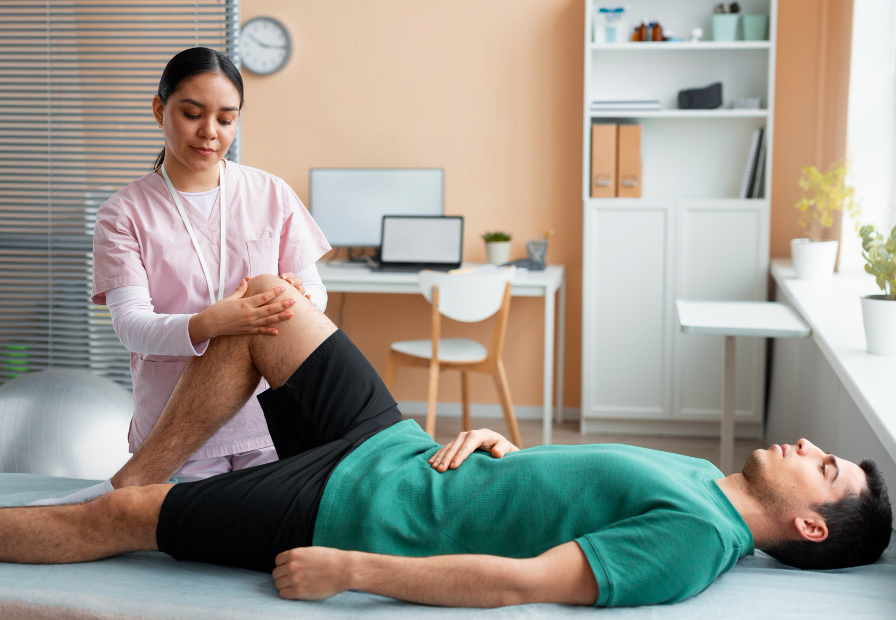
Knee pain is one of the most common and freedom-killing problem that people face today. It can affect with out age limits, working professionals, and athletes. Even simple movements involving actions like walking, climbing stairs, sitting, or standing might become painful. The good news is that knee therapy for pain is a proven and safest technique to reduce discomfort, boost mobility, and to minimize permanent harm to the knee and the surrounding tissues at the same time.
This guide is written to help you understand knee pain, why it happens, and how the right therapy can bring real relief.
Understand Your Knee Pain
The knee is a strong but a very complex joint. It connects your thigh bone, shin bone, and kneecap. Muscles, ligaments, cartilage, and tendons work together to help your movement. When any part of this system is strained, injured, or worn out, pain begins gradually it will kill your sleep.
Common reasons for knee pain
- Wear and tear due to age
- Arthritis (especially osteoarthritis)
- Sports injuries
- Sudden falls or accidents
- Overuse from walking, running, or standing too long
- Weak muscles around the knee
- Poor posture or body alignment
Pain can be felt in the front, sides, or back of the knee. Some people feel stiffness in the morning, while others feel pain after activity.
Why Knee Therapy for Pain Is Important
Many people ignore knee pain or depend only on painkillers. This may give short-term relief but does not fix the real problem. Knee therapy for pain focuses on healing, strengthening, and protecting the knee joint.
Therapy helps by:
- Reducing pain and swelling
- Improving joint movement
- Strengthening muscles that support the knee
- Preventing future injuries
- Delaying or avoiding surgery
When therapy is done correctly, it improves daily life and mobility.
Types of Treatment for Knee Joint Pain
The right treatment for your joint pain depends on the cause and severity. Most people benefit from a combination of treatments rather than just one method.
1. Physical Therapy
Physical therapy is the core of knee pain treatment. It includes :
- Stretching exercises to reduce stiffness
- Strengthening exercises for thigh, hip, and calf muscles
- Balance and posture training
- Guided movement to avoid joint stress
Therapy programs are usually gentle and gradual. They are adjusted based on your pain level and progress.
2. Lifestyle and Activity Changes
Small changes can protect your knees :
- Avoid sudden heavy movements
- Use proper footwear
- Maintain healthy body weight
- Take breaks during long periods of standing or walking
3. Pain Management Support
Depending on your condition, doctors may suggest:
- Ice or heat therapy
- Support braces
- Short-term medication if needed
These help control pain while therapy improves joint strength.
4. Advanced Non-Surgical Care
For long-lasting pain or arthritis, doctors may recommend advanced options like guided injections or regenerative treatments. These are considered only after proper evaluation.
Role of Exercises in Knee Therapy
Exercises are the backbone of recovery. They improve blood flow, strengthen muscles, and protect the joint.
Safe exercises usually focus on:
- Quadriceps (front thigh muscles)
- Hamstrings (back thigh muscles)
- Hip and glute muscles
- Calf muscles
Low-impact activities like walking, cycling, swimming, and basic stretching are often advised. Exercises are always started slowly and increased step by step.
When Should You See a Knee Specialist?
You should not ignore knee pain if:
- Pain lasts more than a few days
- Swelling does not reduce
- You feel instability or locking of the knee
- Walking becomes difficult
- Pain affects sleep or daily work
In such cases, visiting a specialist early helps prevent serious damage.
Expert Knee Pain Care in Jayanagar
If you are looking for trusted care, Patil Spine Ortho Care is known for structured and patient-focused orthopedic treatment. The clinic offers advanced evaluation and customized therapy plans for people with knee problems.
Under the guidance of Dr. Siddhesh Patil, patients receive clear diagnosis and honest treatment plans. The focus is always on non-surgical care first, especially personalized knee therapy programs.
People searching for Knee Pain Treatment Jayanagar often prefer clinics that combine medical knowledge with modern therapy techniques. A specialized Knee pain clinic in jayanagar ensures that treatment is not general but tailored to each patient’s needs.
Benefits of Choosing Proper Knee Therapy
When done under expert supervision, knee therapy:
- Improves confidence in movement
- Reduces dependency on pain medicines
- Helps return to normal daily activities
- Improves joint strength and flexibility
- Supports long-term joint health
Most patients notice gradual improvement within a few weeks when they follow therapy regularly.
Simple Tips to Protect Your Knees
You can support your therapy results by:
- Warming up before exercise
- Stretching after activity
- Avoiding sitting on the floor for long periods
- Using handrails on stairs
- Listening to your body and resting when needed
Prevention plays a big role in keeping knee pain away.
Bonus Tip
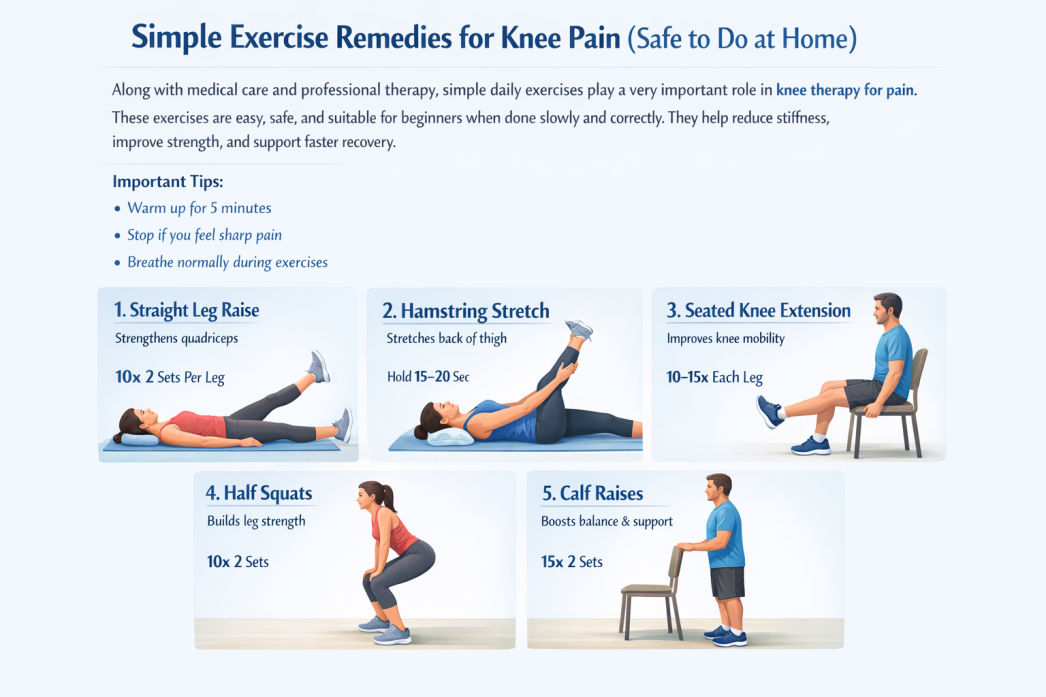
Exercise Remedies for Knee Pain (Safe to Do at Home)
Along with medical care and professional therapy, simple daily exercises play a very important role in knee therapy for pain. These exercises are easy, safe, and suitable for beginners when done slowly and correctly. They help reduce stiffness, improve strength, and support faster recovery.
Important Tips Before You Start
- Warm up for 5 minutes with slow walking
- Stop if you feel sharp or sudden pain
- Move slowly and with control
- Breathe normally during exercises
These exercises support professional treatment knee joint pain plans and work best when done regularly.
1. Straight Leg Raise
Why this exercise helps
This exercise strengthens the front thigh muscles, which support the knee joint and reduce pressure on it.
How to do it
- Lie flat on your back
- Bend one knee and keep the other leg straight
- Slowly lift the straight leg
- Hold for 5 seconds
- Lower it gently
Repetitions
- 10 repetitions
- 2 sets per leg
Helpful for
- Early knee pain
- Arthritis-related weakness
- Post-injury recovery
2. Hamstring Stretch
Why this exercise helps
Tight hamstring muscles increase stress on the knee. Stretching improves flexibility and reduces stiffness.
How to do it
- Lie on your back
- Lift one leg straight up
- Hold behind the thigh
- Gently pull toward your chest
Hold time
- 15 to 20 seconds
Repetitions
- 3 times per leg
Helpful for
- Morning stiffness
- Knee tightness
- Long sitting hours
3. Seated Knee Extension
Why this exercise helps
This movement improves knee mobility and strengthens muscles without placing pressure on the joint.
How to do it
- Sit on a chair with feet flat on the floor
- Slowly lift one leg and straighten it
- Hold for 5 seconds
- Lower the leg slowly
Repetitions
- 10 to 15 times per leg
Helpful for
- Older adults
- Office workers
- Knee pain while walking
4. Half Squats (With Support)
Why this exercise helps
Half squats strengthen the thighs, hips, and muscles that protect the knee joint.
How to do it
- Stand holding a chair or wall
- Keep feet shoulder-width apart
- Bend knees halfway
- Keep your back straight
- Return to standing
Repetitions
- 8 to 10 repetitions
- 2 sets
Helpful for
- Weak knees
- Difficulty climbing stairs
5. Calf Raises
Why this exercise helps
Strong calf muscles reduce pressure on the knee during walking and standing.
How to do it
- Stand near a wall or chair
- Slowly lift your heels
- Stand on your toes for 3 to 5 seconds
- Lower heels gently
Repetitions
- 10 to 15 repetitions
- 2 sets
Helpful for
- Knee pain during walking
- Balance improvement
Final Thoughts
Knee pain does not have to control your life. With the right knee therapy for pain, most people can regain movement and comfort without surgery. Early care, proper exercises, and expert guidance make a big difference.
If knee pain is slowing you down, seeking professional evaluation and structured therapy is the safest step forward. The right treatment at the right time can help you move freely and live pain-free again.